
How to Watch Week 1 Like a Scout: The Five Numbers That Matter Before Anyone's Fantasy Points Do
Box scores lie in Week 1; usage doesn't. Snap shares, route participation, red-zone touches, two-minute duty, and who's on the field in garbage time — a viewing checklist that turns Sunday's games into Tuesday's waiver-wire edge.
 By Nolan Gaffney · Founder, LeagueLocks · Sep 9, 2026 · 7 min read
Sunday night, your league mate will tell you about the receiver who scored twice. Tuesday morning, the sharp manager in your league will quietly claim the receiver who ran 34 routes and caught four balls for 51 quiet yards. By October, the second guy is the better player far more often than the first. Week 1 fantasy points are mostly noise; Week 1 USAGE is the closest thing to a leaked depth chart the season gives you. Here's what to actually watch for.
1. Snap share: who the coaches trust
The single most predictive Week 1 stat isn't yards or touchdowns — it's the percentage of offensive snaps a player was on the field for. Coaches spent all summer deciding exactly this, and Week 1 is the answer sheet. A running back at 65%+ of snaps has a real job whatever his stat line; one at 35% is in a committee no matter how good his one long run looked. Snap counts publish within hours of every game — read them before you read anyone's takes.
2. Routes run: the receiver truth serum
For pass-catchers, targets are noisy but routes are stable. A receiver who runs a route on 85% of dropbacks is one good week from a breakout even if this week's ball never came his way; a 'hot waiver add' who ran 14 routes and caught three of them is a mirage. This is exactly the lens for the relocated stars making debuts this week — an A.J. Brown or D.J. Moore running a full route tree with modest Week 1 numbers is fine; shrinking route shares would be the actual red flag.
3. Red-zone and goal-line roles
Touchdowns are the scarcest, least stable resource in fantasy — but WHO gets the chances is decided by coaches and repeats weekly. Note who takes the carry from the 2-yard line, who's split wide in the red zone, which tight end stays on the field inside the 10. One goal-line package tells you more about October touchdowns than this week's box score does.
4. Two-minute and hurry-up duty
When a game is on the line before halftime, coaches put their real best five skill players on the field — the packages built for winning, not for scripts. The back who stays in during the two-minute drill is the one they trust in passing situations, which is where fantasy value lives. Watch those snaps like they're a depth-chart announcement, because they are.
5. Garbage time tells the quiet truth
The reverse read: when a game is decided, who LEAVES? Starters getting pulled is normal; a supposed starter still out there grinding meaningless snaps in a blowout might not have the grip on the job the beat writers assumed. And a backup taking first-team snaps in a two-score game is sometimes the first public evidence of a changeover coming.
Turning notes into moves
Tuesday is when this pays. Your waiver targets should come off your usage notes, not the points leaderboard — the league-winning adds of every season are players whose role arrived a week before their stats did. And for your betting crew, the same film review feeds the weekly pick: a team whose usage says 'run-heavy, defense-first' is an under lean before the market fully catches on. Watch one week like a scout and you're ahead of every manager who watched it like a fan.
Play responsibly. If gambling stops being fun, call or text 1-800-GAMBLER.
Comments
Loading…
More Fantasy Strategy
Overreaction Season Is Here: What a Week 1 Result Actually Predicts (With Ten Years of Numbers)
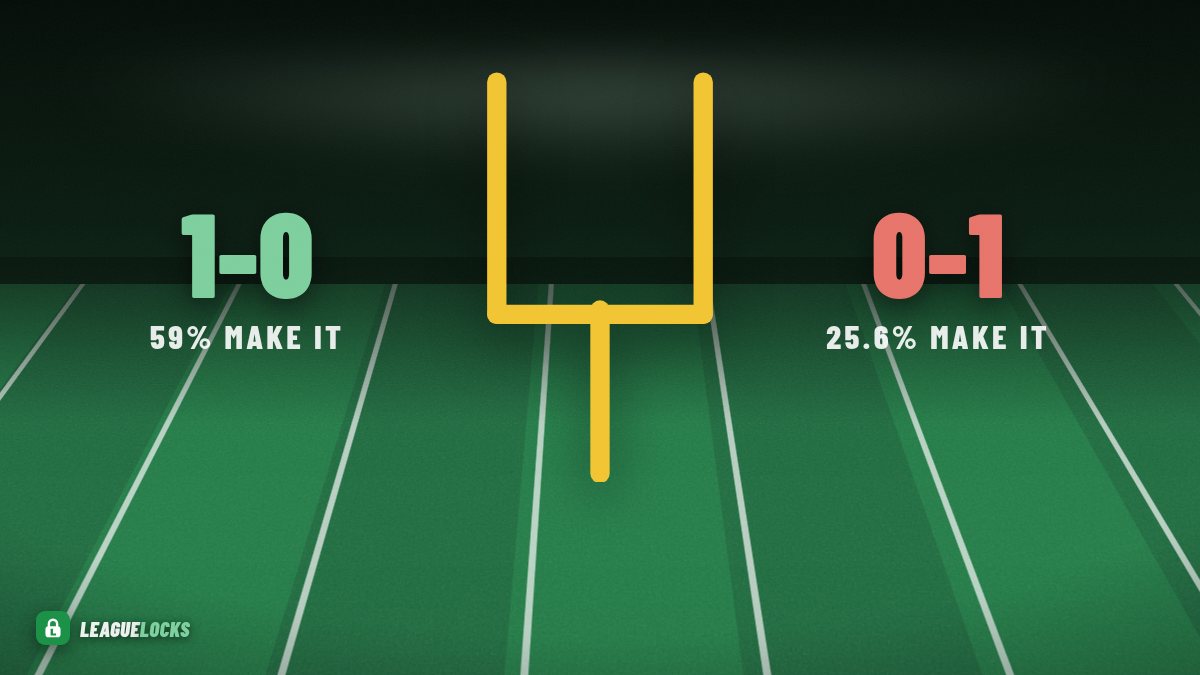
Teams that win their opener make the playoffs 59% of the time; teams that lose it, 25.6%. That gap is real — and it's also exactly why the week after the opener is the most expensive week of the year to have opinions. Here's how to read Week 1 without getting played by it.
Sep 3, 2026 · 7 min read
New Team, New Problem: How to Handle A.J. Brown, D.J. Moore, and the Relocated Stars in Week 1 Lineups
The 2026 offseason scattered star receivers, a Super Bowl MVP running back, and two starting quarterbacks across new rosters. Here's a framework for starting (or benching) relocated players in Week 1 — built on roles, not reputations.
Sep 3, 2026 · 7 min read
10 Fantasy Sleepers Whose Preseason Actually Changed Their 2026 Outlook
Most August risers are mirages built on stats against future insurance salesmen. These ten aren't: each one's price moved because a job, a depth chart, or an injury in front of them actually changed. Draft accordingly this week.
Sep 2, 2026 · 9 min read