
Streaming 101: How to Win Positions You Refuse to Draft
Quarterbacks, tight ends, and defenses can be rented weekly off the wire instead of owned. The matchup logic, the two-week planning trick, and where streaming quietly breaks down.
 By Nolan Gaffney · Founder, LeagueLocks · Sep 12, 2026 · 7 min read
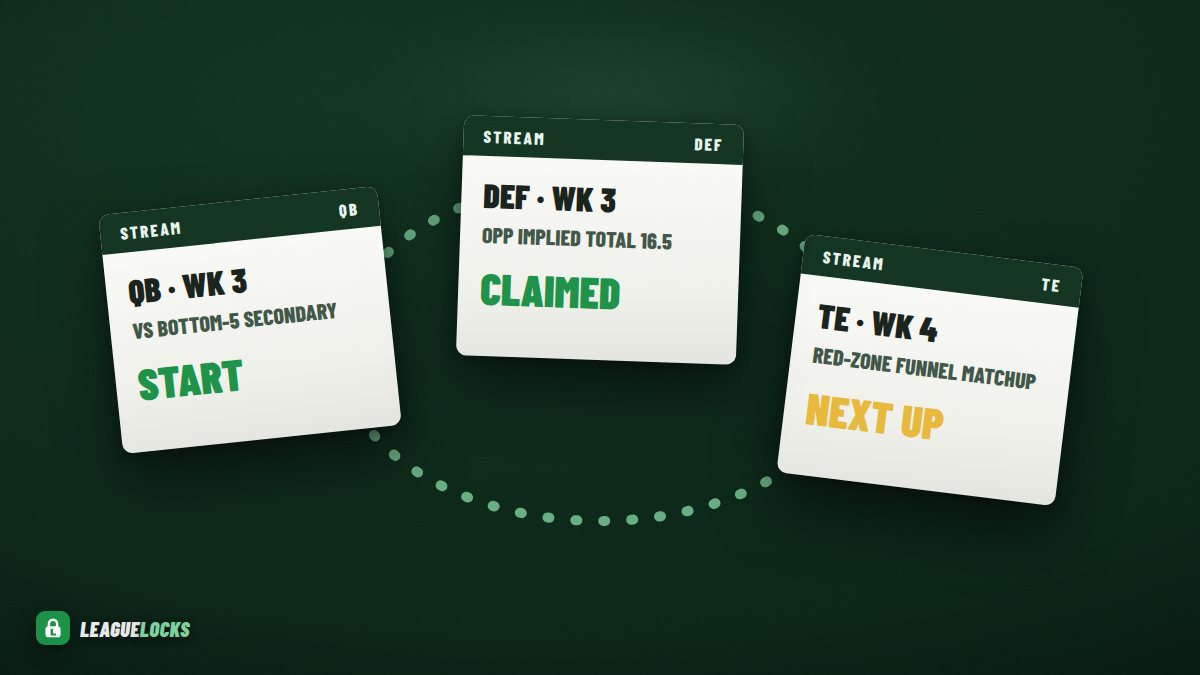 Streaming
Streaming is the art of not owning a position: instead of spending a draft pick on a set-and-forget starter, you play the waiver wire's best matchup at quarterback, tight end, or defense every single week. Done well, a $0 rotation of streamers can outscore the guy someone drafted in round five. Done lazily, it's a weekly panic at Sunday 11 a.m. The difference is a system.
Why streaming works at all
Positions stream well when weekly scoring depends more on matchup than on talent, and when the wire always has a viable option. Defenses are the purest case: an average defense facing a turnover-prone offense reliably outscores an elite defense facing a clean one, which is why the weekly rankings shuffle defenses so violently. Quarterbacks stream because the position is deep, twelve-team leagues leave a dozen starters on the wire, and matchup swings are worth real points. Tight end streams for the opposite reason: the position is so barren that nobody's weekly option is good, so you might as well play the one with the red-zone matchup.
The matchup checklist
Three questions rank every streaming option. Who are they playing? Sacks and turnovers drive defense scoring, so target offenses with shaky lines and mistake-prone quarterbacks; passing volume drives QB streams, so target bad secondaries on fast-paced teams. Where's the game? Home defenses score meaningfully better, and a windy forecast is a quiet boost for defenses and a tax on streaming quarterbacks. What's the total? A defense facing a team with a low implied total is exactly what the betting market thinks a good matchup looks like, and borrowing the market's homework is free. Your crew already reads totals for the weekly pick; point the same skill at your lineup.
The two-week trick
The habit separating good streamers from Sunday scramblers: always hold this week's streamer AND next week's. Wednesday, when waivers clear, check the schedule one week out and grab the defense playing the turnover machine next Sunday before anyone else looks that far. It costs a bench spot and buys you the pick of the litter every week, because the streaming market is almost perfectly week-at-a-time. The same trick applies at quarterback around byes: the manager who claimed his Week 6 fill-in during Week 5 paid $0 for what the panicked market pays $15 for on Saturday night.
Where streaming breaks down
Three honest limits. Deep leagues kill it: in 14-teamers the wire is a desert and owning real starters matters more. Elite outliers beat it: the top two or three tight ends and rushing quarterbacks post weekly ceilings no streamer matches, which is why they cost premium picks in the first place. And attention is the real price: streaming is a Wednesday-and-transaction-news lifestyle, and a manager who won't check in midweek should draft stability instead. Streaming isn't a free lunch. It's a trade: draft capital saved now for weekly diligence all season.
The portable lesson
Streaming teaches the most transferable skill in fantasy: separating the player from the situation. A mediocre unit in a great spot beats a good unit in a terrible one, weekly, at three different positions. Managers who internalize that stop asking 'who's better?' and start asking 'who's better THIS WEEK?', and that question wins fantasy matchups and league votes alike.
Sources are linked where they're used in the article above. Stats and lines are as reported by the cited outlets at publish time. LeagueLocks is not affiliated with the NFL or any team.
Comments
Loading…
More Fantasy Strategy
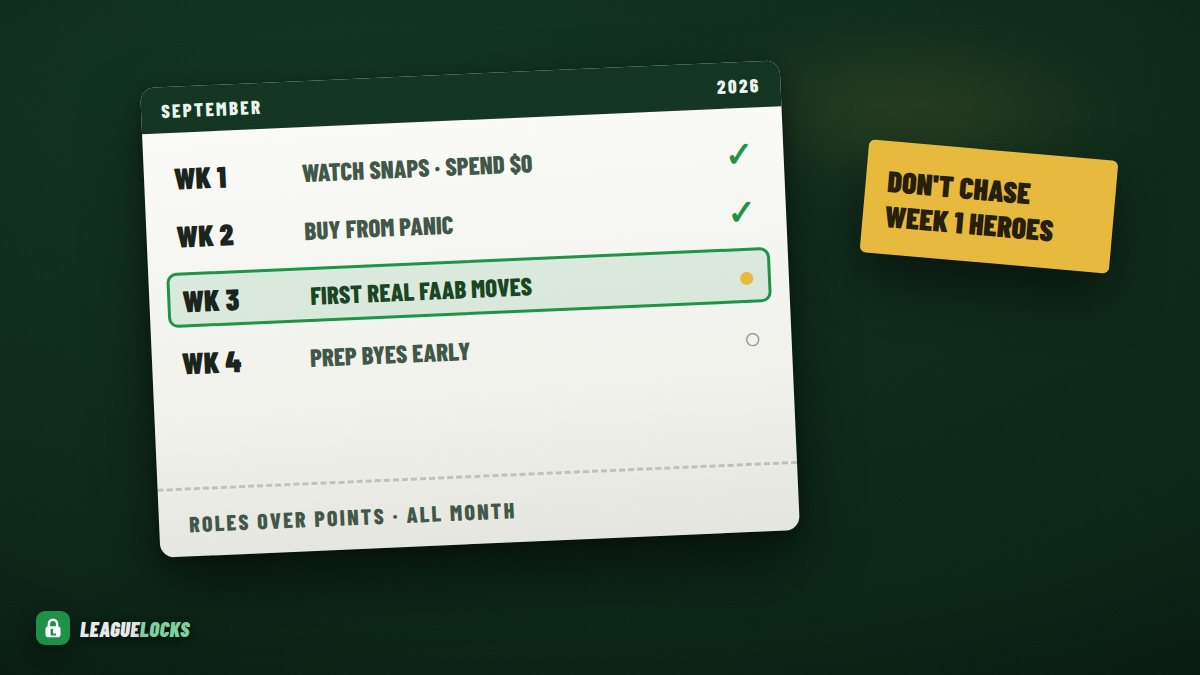
The First-Month Playbook: How to Manage Weeks 1 Through 4 Without Torching Your Season
More fantasy seasons are lost in September than in any other month, and almost never by the players you drafted. A week-by-week operating manual for the season's most overreactive stretch.
Sep 12, 2026 · 8 min read
How to Watch Week 1 Like a Scout: The Five Numbers That Matter Before Anyone's Fantasy Points Do
Box scores lie in Week 1; usage doesn't. Snap shares, route participation, red-zone touches, two-minute duty, and who's on the field in garbage time, a viewing checklist that turns Sunday's games into Tuesday's waiver-wire edge.
Sep 9, 2026 · 7 min read
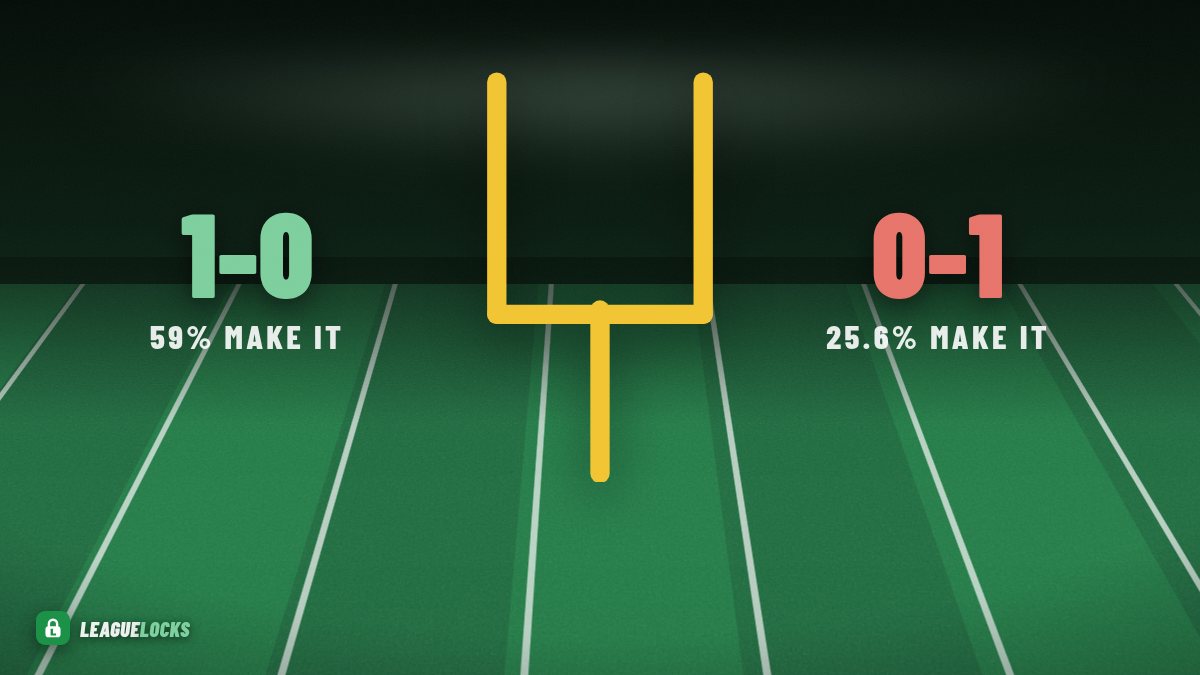
Overreaction Season Is Here: What a Week 1 Result Actually Predicts (With Ten Years of Numbers)
Teams that win their opener make the playoffs 59% of the time; teams that lose it, 25.6%. That gap is real, and it's also exactly why the week after the opener is the most expensive week of the year to have opinions. Here's how to read Week 1 without getting played by it.
Sep 3, 2026 · 7 min read