
How to Read Line Movement: What the Number Moving Is Trying to Tell You
A spread isn't a prediction — it's a live price, and every move is information. Steam, buybacks, key numbers, and the one flip that tells you the market changed its mind: a plain-English guide to reading the board like a second box score.
 By Nolan Gaffney · Founder, LeagueLocks · Sep 9, 2026 · 7 min read
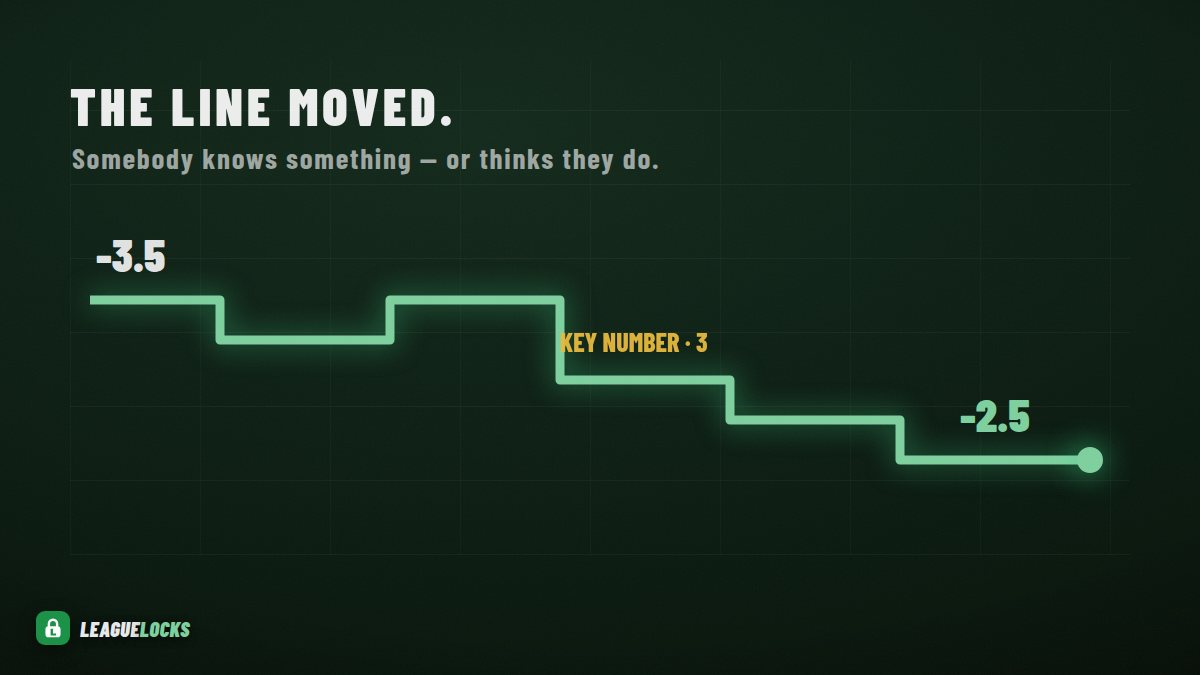
Your league is staring at a game listed at -3.5. By Thursday it's -2.5. Did the books learn something? Did the public pile in? Should that change your vote? Line movement is the closest thing betting has to a second box score — but only if you know what a move actually means. Here's the working vocabulary.
A line is a price, not a prediction
The book's goal isn't to guess the final score — it's to set a number where it's comfortable with the money it's holding on both sides, priced through the juice. When the number moves, one of two things happened: real information arrived (an injury, a weather report, a quarterback announcement), or the money got lopsided enough that the book adjusted the price. Your first job with any move is deciding which one you're looking at.
News moves vs. money moves
News moves are easy: a starting quarterback is ruled out and the spread jumps three points in an hour. Nothing clever there — the world changed and the price followed. Money moves are subtler: the number drifts half a point at a time over days. The tell is timing and size. A slow drift toward the popular side is usually recreational money doing what it always does. A sharp, sudden move — especially one that shows up across many books at once — is what bettors call steam: heavy, respected money hitting one side, and books repricing in self-defense.
Reverse line movement: the one worth pausing on
The most interesting pattern is when the line moves AGAINST the crowd. If 80% of bets are on the favorite and the spread drops from -3.5 to -2.5 anyway, the small number of bets on the underdog carried more weight than the large number on the favorite — which usually means bigger, sharper money took the dog. Nobody outside the book knows for certain, but reverse movement is the closest thing to a public signal that professionals disagree with the public.
Key numbers: why -2.5 to -3.5 is a bigger move than it looks
NFL games land on certain margins constantly — 3 and 7 above all. Crossing one of those numbers changes real win probability for a spread bet, which is why books fight hardest at exactly those prices. A move from -4.5 to -5.5 is routine; a move through 3 — like the Rams-49ers opener crossing from -2.5 to -3.5 this month — means the market genuinely repriced the game, not just rebalanced its ledger.
The strongest signal: a flipped favorite
Rarest and loudest of all: the favorite changes sides. Green Bay opened -1.5 against Minnesota in May; by September, after Kyler Murray won the Vikings' job, Minnesota was the favorite. A flip means the summer's information overturned the market's original read of the game entirely. When your league sees one, the debate shouldn't be 'which team is better' — it's 'do we believe the reason for the flip.'
What a crew should actually do with all this
Three habits. First, note the line when your chooser proposes a pick and again when voting closes — if it moved toward your side, the market agrees with your league; away, and someone out there disagrees with real money. Second, treat closing line value as a season-long scorecard: consistently beating the close is the best evidence a crew picks well, better than short-term wins and losses. Third, never chase a move you don't understand — a number that got worse while you debated is information, not a discount.
Play responsibly. If gambling stops being fun, call or text 1-800-GAMBLER.
Comments
Loading…
More Betting Guides
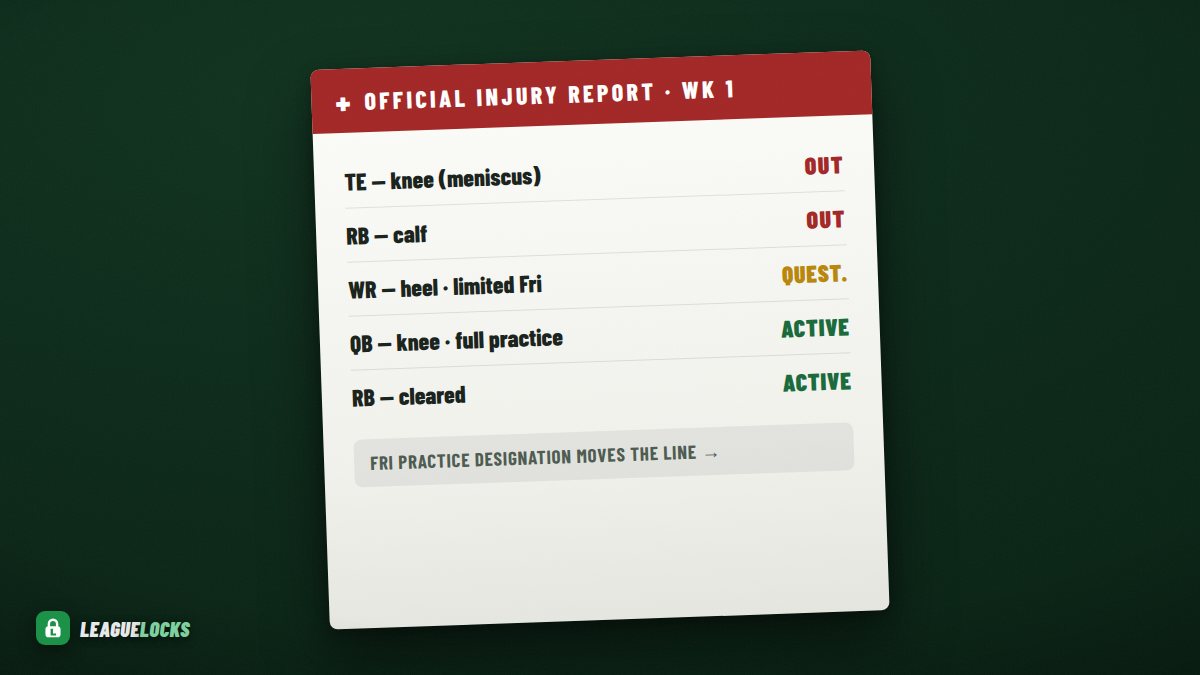
The Injury Report Is a Betting Document: How to Read Week 1's — and Every Week After
Brock Bowers is out. So are Josh Jacobs, Michael Penix Jr., and the rookie Henderson. Mahomes, McCaffrey, and Nacua are go. The league's official injury report is the most underused betting document of the week — here's how a crew turns it into edge.
Sep 9, 2026 · 7 min read
New Faces, New Places: The Week 1 Debuts That Are Quietly Moving Betting Lines
A.J. Brown opens the season against the team that just beat his old one. Myles Garrett debuts for the Rams in Melbourne. Kyler Murray won the Vikings job outright. Every one of the 16 openers has a headline debut — and rosters this scrambled are exactly when the market misses.
Sep 3, 2026 · 7 min read
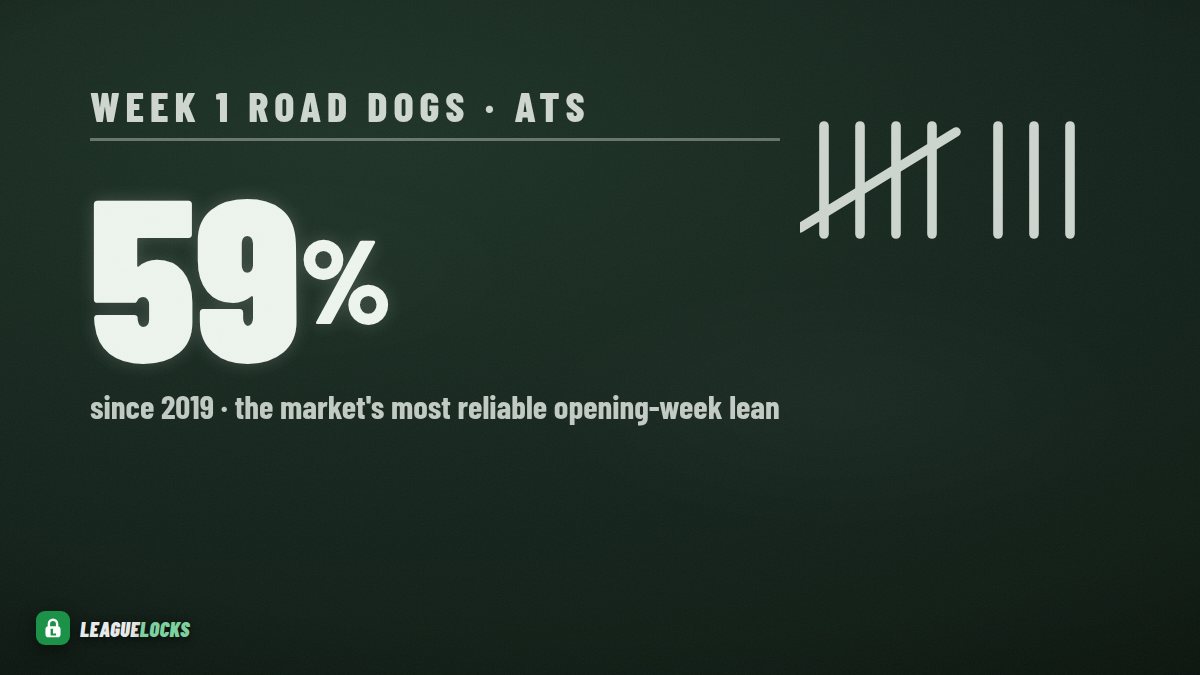
The Week 1 Numbers: Underdogs Eat, Home Field Naps, and the Over Is a Trap
Since 2019, Week 1 underdogs cover at 56.8% — and road dogs at 59%. Home teams post their worst ATS week of the season, and the over hits under 45% of the time. Before your league locks its opener, know the three ways Week 1 is a different market.
Sep 3, 2026 · 6 min read